How breathable should a jacket be? The answer changes with your pace, weather, and personal comfort. A jacket for slow city walks needs different performance from one used during steep mountain climbs. Breathability helps sweat vapor escape before your base layer feels cold and damp. It does not mean unlimited airflow.
Dr. George Havenith, a leading researcher in clothing physiology, explains, “Breathability is not an absolute property; it depends on the wearer, the clothing, and the environment.” His point matters because laboratory ratings cannot predict every real-world experience. A highly breathable shell may feel excellent during a windy hike. It may feel insufficient during heavy rain or humid conditions. Even a small backpack can press fabric against your back and reduce ventilation.
Think about the details. Your collar may stay open during a climb. Your sleeves may trap heat while carrying groceries. Zippers, mesh panels, fabric construction, and layering all influence comfort. A jacket with impressive specifications can still feel clammy when worn over thick clothing.
There is no perfect number for every person. That is the honest part. Some advice oversimplifies the decision. The right balance depends on activity intensity, rainfall, temperature, and how heavily you sweat. This guide explores seven practical tips for choosing suitable breathability. It also considers waterproofing, fit, ventilation features, and fabric ratings. Your ideal jacket should protect you without making you feel sealed inside plastic. Sometimes, comfort matters more than a headline specification.
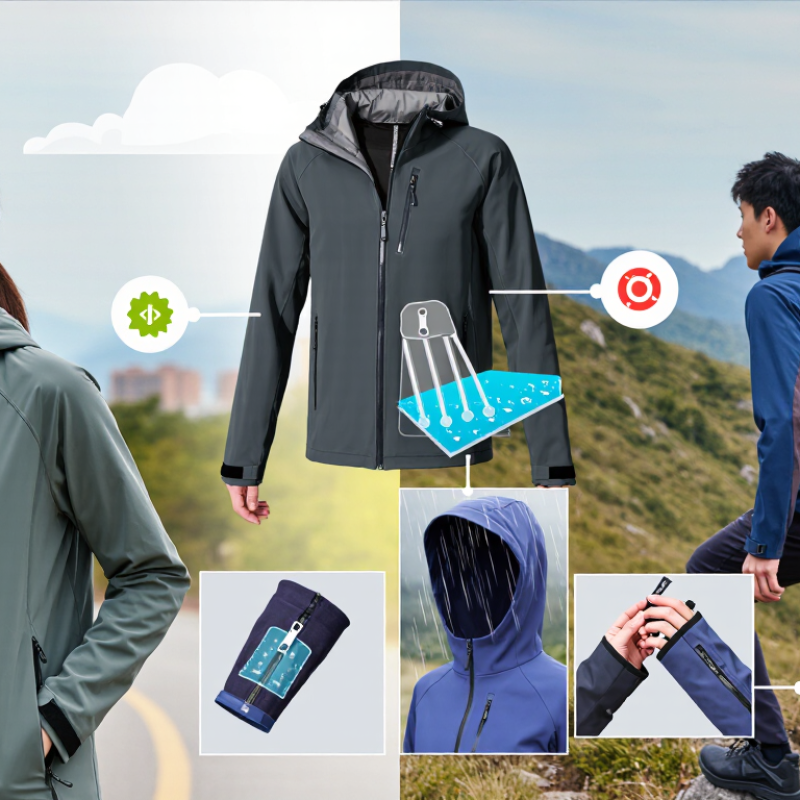
Breathability describes how easily water vapor escapes through a jacket. It is different from ventilation, which depends on openings, zippers, and airflow. When walking uphill, your body produces heat and sweat quickly. A breathable shell can reduce the damp, sticky feeling inside. That matters because wet inner layers chill you during slower periods. More breathability is not always better.
Match the jacket to your activity. Light hiking may need moderate breathability, while cycling or climbing demands faster moisture release. Check laboratory figures carefully, but treat them as comparisons, not guarantees. Real performance changes with humidity, wind, backpack pressure, and fabric wear. Look for pit zips or mesh vents when effort varies. A relaxed fit also leaves space for warm air to move. Tight layers can defeat good fabric.
Water resistance creates a practical compromise. A highly protective jacket may feel warmer during hard exercise. My early mistake was choosing maximum weather protection for gentle city walks. I overheated before rain became a problem. Test a jacket by walking briskly with your usual layers. Notice dampness around your back, collar, and wrists. Check whether the hood restricts airflow or movement. Wash the garment according to its care instructions, because dirt and residue can reduce fabric performance. Expect trade-offs. No jacket stays perfectly dry inside during every activity.
| Tip | What to Check | Useful Breathability Reference | Best Use Case | Why It Matters |
|---|---|---|---|---|
| 1 | Match breathability to activity level | Low to moderate breathability for walking and casual use; high breathability for running, hiking uphill, cycling, or ski touring. | Everyday wear versus sustained aerobic activity | The harder the body works, the more heat and water vapor it produces. A highly breathable jacket helps reduce internal moisture buildup during active movement. |
| 2 | Understand RET values | RET below 6: very good breathability; RET 6–13: good; RET 13–20: satisfactory; RET above 20: lower breathability. Lower RET is better. | Comparing laboratory-tested waterproof shells | RET, or evaporative resistance of a textile, measures how strongly a fabric resists water-vapor transfer. It is commonly reported in m²·Pa/W. |
| 3 | Do not confuse MVTR with air permeability | MVTR is often reported in g/m²/24 h; air permeability is often reported in CFM/ft². These are different tests and should not be compared directly. | Reading technical product specifications | MVTR describes moisture-vapor transmission under a test method, while air permeability describes airflow through a material. A fabric can block wind yet still transmit vapor. |
| 4 | Consider weather and layering | Choose greater breathability in mild, humid, or high-output conditions; prioritize weather protection in cold rain, strong wind, or exposed terrain. | Variable mountain weather and multi-layer systems | Breathability works best when the outside air is cooler and drier than the air inside the jacket. High humidity and saturated outer fabric can slow vapor transfer. |
| 5 | Look for adjustable ventilation | Pit zips, chest vents, two-way front zippers, and mesh-lined pockets provide direct airflow when fabric breathability is not enough. | Stop-and-go activities and sudden changes in effort | Mechanical ventilation can release heat and moisture quickly, especially during intense activity, even when the jacket is waterproof and wind resistant. |
| 6 | Check the complete jacket system | A breathable shell may perform poorly over non-breathable base layers, heavy insulation, a backpack, or clothing that becomes saturated with sweat. | Hiking, commuting, climbing, and backpacking | Backpack straps can compress fabric, while unsuitable layers can trap moisture. Breathability depends on the fabric, garment design, layering, fit, and conditions together. |
| 7 | Balance breathability with protection | For frequent rain and wind, select a waterproof shell with a tested low RET or strong moisture-vapor performance, plus useful vents and a durable water-repellent surface. | Wet, windy, and changeable conditions | More breathability is not always better if the jacket cannot protect against rain or wind. The best choice provides enough vapor transfer without sacrificing the required weather protection. |
Moderate breathability usually works for slow city walks and daily commuting. A vented back can release heat without exposing your whole torso. You may not need maximum airflow.
Choose higher breathability for sustained exercise and steep climbs. Underarm vents help remove heat before sweat builds up. Open them early.
Hold the fabric near your mouth and breathe gently through it. Some resistance is normal. A sealed feeling may indicate limited airflow. The test is rough.
Yes. A slightly loose fit allows air to move around your body. Avoid tightening every cord at once. That can create a warm, humid pocket.
Avoid thick cotton because it holds sweat against your skin. Use a lighter base layer instead. Check your back and collar during breaks.
Humid air slows evaporation, so even breathable fabric may feel clammy. Choose lightweight materials and larger vents in hot, humid conditions. Comfort may still be imperfect.
Not always. Strong airflow can let cold wind reach damp clothing on exposed ridges. Balance ventilation with wind protection, sealed seams, and a protective hood.
Dirt and body oils can reduce fabric performance. Follow the care instructions and rinse the jacket thoroughly. I sometimes underestimated this effect.
Wear it during a brisk ten-minute walk, then inspect damp areas. Change one layer or vent at a time. A short outing reveals problems early.
No. Breathability cannot remove all sweat or prevent every comfort problem. Your pace, layers, humidity, and sweat level still matter. Expectations can be unrealistic.
How breathable should a jacket be depends on your activity, weather, and personal comfort. Breathability describes how easily heat and moisture vapor escape from the inside of a jacket, helping you stay dry and comfortable. For low-intensity activities, moderate airflow may be enough, while hiking, cycling, or other high-output activities require greater breathability to prevent sweat from building up. Fabric structure, ventilation openings, fit, layering, and outer coatings all influence how well a jacket releases moisture.
Weather conditions also matter when choosing the right balance. In cool, dry weather, stronger airflow can improve comfort, but in cold, wet, or windy conditions, too much ventilation may reduce warmth and protection. You can assess a jacket by checking its ventilation features, testing it during light activity, and observing how quickly moisture accumulates inside. Choosing adjustable vents, breathable layers, and a suitable fit can further improve airflow and help the jacket perform effectively in changing conditions.

 ASALUXE Fashion