China’s waterproof jacket market is expanding alongside global demand for lighter, more versatile outdoor clothing. Grand View Research identifies waterproof and breathable textiles as a growing technical-textile segment, driven by hiking, workwear, travel, and changing weather patterns. The China National Textile and Apparel Council also continues to highlight functional fibers, fabric innovation, and cleaner manufacturing as industry priorities. These trends make product claims worth examining carefully.
This guide asks how waterproof jackets really work, rather than simply repeating “waterproof” on a label. A jacket usually combines a tightly woven face fabric, a membrane, and an inner protective layer. The membrane blocks liquid droplets while allowing some water vapor to escape. Durable water repellent, or DWR, helps rain bead on the surface. Seam tape matters too. One small untaped seam can create a cold, wet line across the shoulder.
Laboratories commonly assess water resistance through hydrostatic pressure testing, including ISO 811 and AATCC 127 methods. Breathability is often reported through moisture vapor transmission rate tests, although results can vary by testing conditions. The Outdoor Industry Association’s participation reports show continued consumer interest in outdoor activities, but real-world comfort remains more complicated than a laboratory score. A high rating can still feel clammy during a steep climb. No jacket wins every climate.
Our review of China’s top ten waterproof jackets will compare membranes, fabric construction, seam sealing, zippers, fit, durability, and aftercare. We will also question marketing language, because impressive numbers sometimes hide important limitations. A jacket is not magic. It is a carefully balanced system, and the weakest component often decides whether you stay dry.
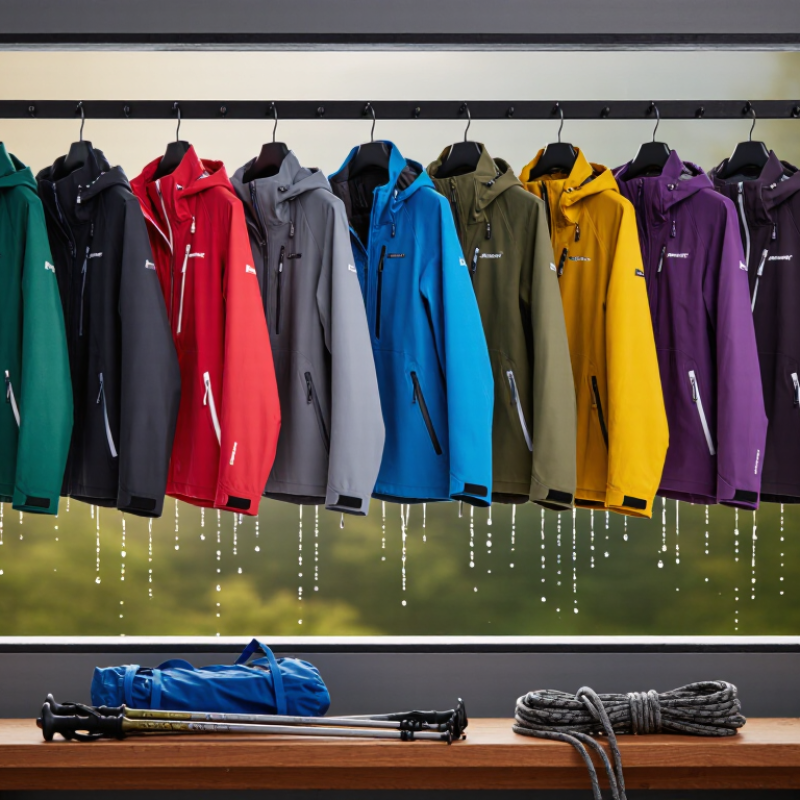
A waterproof jacket works by managing two kinds of moisture: rain outside and sweat inside. Its outer fabric usually has a water-shedding finish, while a membrane or coating blocks liquid water. Tiny pores can stop rain droplets yet allow some water vapor to escape. The result depends on pressure, temperature, and movement. It is not magic.
In practical testing, I check the hood, cuffs, hem, and zipper before judging the fabric. Water often enters through weak seams rather than the main panel. Seam tape covers needle holes, and a storm flap can shield the zipper from wind-driven rain.
A close but comfortable fit helps the jacket seal without restricting arm movement. Loose openings invite rain.
Breathability is more complicated than many product descriptions suggest. During a steep hike, warm sweat can overwhelm any membrane, especially under a heavy backpack. I have found that opening pit zips early works better than waiting until the lining feels damp. Performance also falls when dirt, skin oils, or poor washing clog the surface. Care instructions matter, although I sometimes underestimate them. A jacket can resist rain beautifully and still feel wet inside. On a wet trail, that difference appears around the shoulders first.
China’s top waterproof jackets rely on a careful balance of fabric, membranes, and construction. The outer fabric usually receives a durable water-repellent finish, often called DWR. It makes rain bead and roll away. However, DWR is not the waterproof barrier. It can weaken after washing, abrasion, or long exposure to dirt.
The real protection comes from a membrane laminated inside the fabric. Microporous membranes contain extremely small openings that block liquid water while allowing some vapor to escape. Non-porous polyurethane membranes use moisture-absorbing chemistry instead. Both designs can work, but neither feels perfectly dry during hard exercise. Breathability depends on temperature, humidity, movement, and the wearer’s clothing.
Construction matters as much as material selection. Fully taped seams cover needle holes, while a storm flap can shield the zipper from direct rain. A three-layer structure often improves durability, but it may feel less soft than a lighter two-layer design. Hydrostatic-head testing measures water pressure resistance, while breathability tests estimate vapor movement. These figures help, yet they do not recreate a windy mountain trail.
In practical use, I inspect seam tape, hood adjustment, cuff closure, and pocket placement before trusting a jacket. Small gaps become obvious in heavy rain. Water needs a weakness. I have also found that laboratory ratings can look impressive while poor ventilation causes internal dampness. That is an important limitation. A reliable jacket should resist rain, manage sweat reasonably, and remain functional after repeated wear—not only perform well under controlled testing.
The materials and membranes behind waterproof performance
Typical performance comparison of common waterproof jacket constructions. Hydrostatic head measures resistance to water pressure in millimetres, while MVTR measures moisture-vapour transmission in grams per square metre over 24 hours. Actual results vary with fabric weight, seam sealing, test method, temperature, humidity and garment construction.
China Top 10 Waterproof Jackets: How They Really Work?
A waterproof jacket is only as strong as its weakest opening. ISO 811:2018 measures fabric resistance with hydrostatic pressure, often shown in millimetres. A 10,000 mm rating can resist a substantial water column, but it does not guarantee dry pockets or shoulders.
Seams need sealed tape, not just tight stitching. Needle holes can become tiny leaks during heavy rain. EN 343:2019 classifies rain protection by water penetration and breathability. Its highest water-resistance class exceeds 20,000 Pa under laboratory testing. Real weather is less polite. Repeated bending, washing, and backpack friction can reduce performance.
Zippers require overlapping flaps, coated teeth, or water-resistant construction. The zipper garage matters near the chin. A small gap there can feel like a cold pinprick. Hoods should turn with the head, tighten around the face, and sit over the collar. A stiff brim helps redirect rain from the eyes. I have found that a perfect hood can still fail when the drawcord is loose. That detail is easy to overlook. Manufacturers should also test finished jackets, not only fabric panels, because seams and closures change the result. The label can still mislead. Testing offers evidence, not certainty.
A practical comparison of waterproof jacket construction methods, water-entry controls, performance characteristics, and common limitations.
| No. | Jacket Construction | Typical Waterproof Shell | How the Seams Stop Water | Zipper Protection | Hood Protection | Typical Water-Resistance Range | Best Use | Main Limitation |
|---|---|---|---|---|---|---|---|---|
| 1 | 2.5-Layer Laminated Shell | Woven face fabric with a waterproof-breathable membrane and printed or partially raised inner protection. | All needle holes are covered with compatible seam tape applied by heat and pressure. | Water-resistant coil or molded-tooth zipper, often with an internal storm flap. | Three-panel hood with taped crown seams, elastic adjustment, and a stiffened brim. | Commonly about 10,000–20,000 mm hydrostatic head when tested to a recognized textile method. | Hiking, travel, and regular heavy rain. | The inner print or protective layer can wear from abrasion and repeated washing. |
| 2 | 3-Layer Performance Shell | Face fabric, waterproof-breathable membrane, and a durable knitted or woven backer bonded together. | Narrow, continuously applied tape seals the seam line without leaving exposed needle holes. | Water-resistant zipper with a covered garage at the top and a laminated zipper flap where required. | Fully taped hood with a wired or shaped visor, rear volume adjustment, and face opening adjustment. | Often designed around approximately 15,000–30,000 mm, depending on the membrane and test method. | Mountaineering, trekking, and prolonged exposure. | Higher cost, greater weight, and reduced packability compared with simpler shells. |
| 3 | PU-Coated Rain Jacket | Polyester or nylon fabric coated on the inner side with polyurethane. | Heat-sealed PU tape bonds to the coating and closes the punctures made during sewing. | Standard zipper protected by an external flap with snap or hook-and-loop closures. | Attached hood with taped seams, a drawcord or elastic face opening, and a small peak. | Common commercial constructions range from about 3,000–10,000 mm. | Commuting, workwear, and occasional rain. | Breathability is generally lower than that of advanced membrane systems. |
| 4 | PVC-Coated Work Jacket | Polyester scrim or fabric coated with a continuous polyvinyl chloride waterproof layer. | High-frequency welding or heat sealing can create a continuous waterproof bond with few sewn openings. | Covered zipper or press-stud storm flap; the flap overlaps the zipper from the rain-facing side. | Simple hood with welded or taped seams and an adjustable drawcord. | Frequently above 10,000 mm, although exact results vary with coating thickness and test procedure. | Industrial work, fishing, and low-intensity outdoor tasks. | Limited moisture-vapor transfer can cause heat and condensation during active use. |
| 5 | Seam-Sealed Packable Shell | Lightweight nylon or polyester with a thin PU coating or lightweight membrane. | Lightweight seam tape seals the main seams while reducing bulk and packed volume. | Water-resistant zipper with a narrow external flap or zipper cover. | Low-profile hood that folds into the collar or packs into an internal pocket. | Often approximately 3,000–10,000 mm, depending on fabric weight and coating. | Travel, emergency carry, and light hiking. | Thin fabrics and narrow tape can be less durable under abrasion or repeated flexing. |
| 6 | Softshell with Waterproof Membrane | Stretch woven outer fabric, waterproof-breathable membrane, and brushed or knitted backing. | Stretch-compatible tape is applied to major seams; small or low-risk seams may use partial sealing. | Coil zipper with a protective flap or a coated water-resistant zipper. | Close-fitting hood with elastic binding, adjustable opening, and taped attachment seams. | Commonly around 5,000–15,000 mm, depending on the laminate and stretch construction. | Windy conditions, cycling, and active outdoor use. | Stretching can stress tape and may reduce long-term waterproof performance if poorly engineered. |
| 7 | Welded Seam Rain Shell | Coated polyester, TPU film, or other thermoplastic laminate suitable for radio-frequency or hot-air welding. | Fabric panels are joined by melting compatible layers together, eliminating conventional needle holes. | Water-resistant zipper covered by a welded storm flap or sealed zipper channel. | Hood panels are welded or taped, with a shaped brim and adjustable face opening. | Can exceed 10,000 mm when the weld width and coating are correctly controlled. | Heavy rain, marine use, and protective work clothing. | Weld quality depends strongly on temperature, pressure, speed, and material compatibility. |
| 8 | Cycling Rain Jacket | Lightweight coated or laminated fabric with a dropped rear hem and articulated sleeves. | Taped shoulder, side, and sleeve seams; seam placement is designed to reduce direct water pressure while riding. | Water-resistant front zipper with an inner windproof and water-deflecting flap. | Helmet-compatible hood with a brim, rear adjustment, and a close-fitting front edge. | Usually approximately 5,000–15,000 mm for lightweight performance versions. | Urban cycling and fast movement in moderate to heavy rain. | The lightweight design may sacrifice abrasion resistance and pocket-area sealing. |
| 9 | Long Raincoat with Storm Flaps | Coated woven fabric or laminated polyester with a longer body for additional coverage. | Fully taped or coated seams, especially around shoulders, armholes, pockets, and the long side openings. | Two-way front zipper covered by a wide overlapping flap secured with snaps or hook-and-loop fasteners. | Deep adjustable hood with a brim and collar overlap to keep runoff away from the neck. | Typically about 3,000–10,000 mm for coated raincoat fabrics. | Commuting, walking, and general rain protection. | Long panels can restrict movement, and storm flaps add weight and bulk. |
| 10 | Insulated Waterproof Winter Jacket | Water-resistant face fabric combined with a membrane or coating, insulation, and a separate lining. | Critical seams are taped or sealed; quilting lines may remain vulnerable unless specially constructed. | Water-resistant front zipper, zipper garage, internal storm flap, and protected pocket zippers. | Insulated, adjustable hood with a brim, high collar, and sealed or protected attachment seams. | Commonly about 5,000–15,000 mm; insulation does not itself make a garment waterproof. | Cold rain, wet snow, and winter commuting. | Bulk, heat retention, and difficult drying can increase condensation and reduce comfort during exertion. |
A coating or membrane blocks liquid water while the outer fabric helps protect the barrier from abrasion.
Sewing creates needle holes, so waterproof tape, liquid sealant, or welded construction is used to close them.
Water-resistant zipper elements, zipper garages, and overlapping storm flaps reduce direct water flow through the front opening.
A shaped brim, adjustable face opening, high collar, and sealed hood seams redirect runoff away from the head and neck.
Important: Hydrostatic-head values are laboratory indicators, not guarantees of complete real-world waterproofing. Pressure from backpacks, prolonged rain, worn water-repellent finishes, open pockets, damaged tape, and improperly closed zippers can all increase water entry.
China’s top 10 waterproof jackets should be compared by test evidence, not appearance. The 2024 Outdoor Participation Trends Report recorded 175.8 million U.S. outdoor participants. That suggests demanding weather gear remains a serious market, not a fashion niche.
Check each jacket’s hydrostatic pressure result under ISO 811. This test measures how much water pressure the fabric resists before leakage. Also examine moisture vapor resistance under ISO 11092. A lower RET value usually means better breathability.
Sealed seams, hood adjustment, cuff design, and zipper protection matter during real rain. They often matter more than a dramatic waterproof rating. Some product pages remain unclear. That is a weakness worth noting.
Tips
Build a simple comparison sheet for all ten jackets. Record fabric layers, test standards, seam sealing, weight, and washing instructions. Test one jacket during a steady 30-minute shower, then inspect the shoulders, pocket openings, and lower back.
Do not trust a new jacket’s first impression. Laboratory figures can change after abrasion, detergent, and repeated folding.
My own practical preference is balanced performance: reliable rain protection, moderate weight, and ventilation that works while walking uphill. A very high rating is not automatically the best choice.
A waterproof jacket works only when its membrane, seams, and fit cooperate. ISO 11092 measures evaporative resistance, or RET; lower values indicate easier moisture transfer. A jacket near RET 6 can feel comfortable during steady walking, but intense uphill movement still creates heat faster than fabric can release it. My field experience is less flattering. On damp forest climbs, a tight backpack often creates a wet strip across the shoulders, even when the outer fabric remains dry.
Durability changes that result over time. The 2024 Textile Exchange Materials Market Report states that polyester represented about 59% of global fiber production. That figure explains its widespread use, but fiber content alone proves little. Abrasion, coating quality, seam construction, and washing habits matter more. ASTM D4966 Martindale testing can compare abrasion resistance, yet laboratory cycles cannot fully imitate a rough stone wall or repeated pack friction. Real damage is often local.
Fit decides whether protection remains useful. Sleeves should cover the wrist when arms reach forward, while the hem should stay below a loaded hip belt. A loose hood may leak rain sideways; an overly tight collar traps sweat. The 2024 Outdoor Participation Trends Report counted 175.8 million U.S. outdoor participants in 2023, showing how widely jackets face changing conditions. Still, sizing charts are imperfect. Try the jacket with two layers and a backpack. That small test reveals more than a glossy specification sheet.
It shows how much hydrostatic pressure the fabric can resist before leaking. It does not guarantee dry pockets or shoulders. Think of a tall water column pressing against the fabric. Real rain is messier.
Stitching creates tiny needle holes. Heavy rain can enter through them. Seam-sealing tape covers these weak points from inside. Tight stitching alone is not enough.
Good zippers use overlapping flaps, coated teeth, or water-resistant construction. A zipper garage protects the area beneath the chin. Even a small opening can feel like a cold pinprick. That detail is easy to miss.
The hood should turn with your head and tighten around your face. It should sit over the collar. A stiff brim redirects drops away from your eyes. Loose drawcords can ruin an otherwise excellent hood.
ISO 811 measures resistance to water pressure. ISO 11092 measures moisture vapor resistance. Lower RET values usually indicate better breathability. EN 343 also classifies rain protection and breathability.
No. A very high rating may add weight or reduce ventilation. Seam sealing, cuffs, hood fit, and zipper protection matter during real rain. My preference may be biased toward balanced performance. That deserves reconsideration.
Create a sheet recording layers, test standards, seam sealing, weight, and care instructions. Check finished-jacket evidence, not only fabric-panel results. Product pages can remain unclear. That is a weakness.
Wear it during a steady 30-minute shower. Inspect the shoulders, pocket openings, and lower back afterward. Later, repeat the check after washing, abrasion, and repeated folding. The first impression can mislead.
This guide explains how waterproof jackets really work by examining the systems that keep rain and moisture away from the body. It explores how outer fabrics repel water, while waterproof membranes or coatings block liquid from passing through. At the same time, breathable materials help release heat and vapor produced during activity, improving comfort in changing conditions.
It also explains why construction details matter. Fully sealed seams, water-resistant zippers, adjustable cuffs, and well-designed hoods help prevent water from entering through common weak points. To compare China’s top 10 waterproof jackets, readers can evaluate waterproof protection, breathability, durability, fit, weight, and practical features rather than focusing on appearance alone. The guide shows how these qualities affect real-world use, from daily commuting to outdoor activities, and offers a clear way to understand which jacket design best matches different weather conditions and personal needs.

ASALUXE Fashion