Winter dressing is not a styling trick; it is a small lesson in managing heat, wind, and movement. The question of how to wear dresses in winter without feeling cold depends on more than choosing a thicker fabric. A bare gap between a coat and a knee, damp tights, or cold pavement can undo an otherwise sensible outfit. Small details matter.
The NOAA 1991–2020 U.S. Climate Normals show why one winter formula cannot suit every place: local temperature patterns differ. For clothing insulation, the ASHRAE Handbook—Fundamentals uses the clo unit to describe thermal resistance. These references offer useful context, but neither can promise comfort for every body or commute. A warm train, a windy bus stop, and a long outdoor walk are different conditions.
This guide focuses on practical layers: opaque tights or thermal leggings, a thin base layer beneath the dress, and a coat that covers the hips. Wool blends, lined boots, and a scarf can help, too. Keep the fit in mind. Several tight layers may restrict movement, while one bulky layer can leave cold spots. A small test helps: sit, walk, and check whether the hem shifts before heading out. Not foolproof. Comfort varies, and even a well-planned outfit may need adjustment when the weather changes.
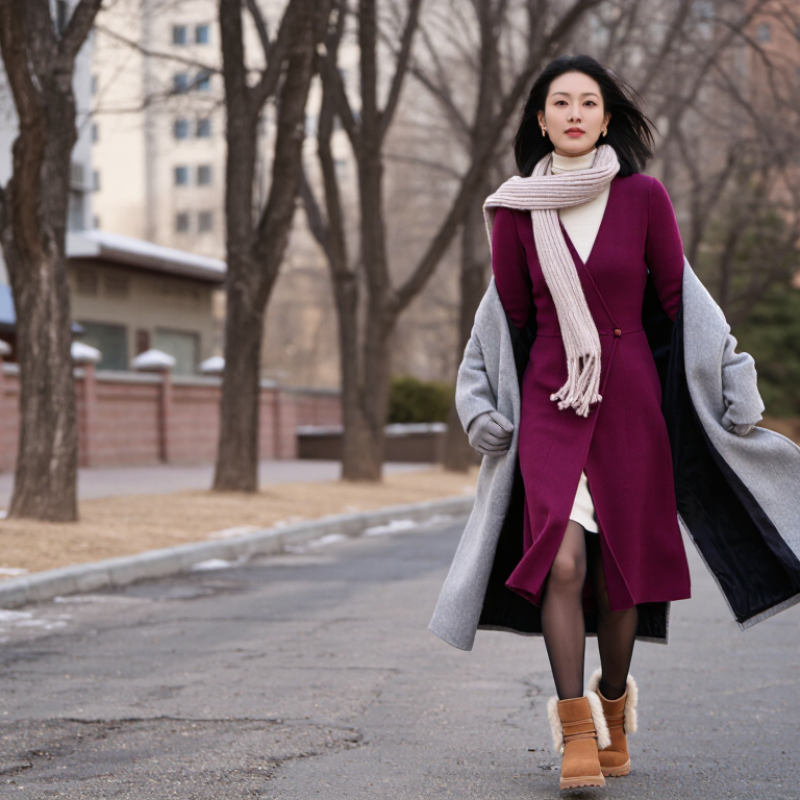
Choose Winter-Ready Dress Fabrics and Silhouettes
A winter dress feels warmer when its fabric traps air and blocks drafts. Look for substantial wool blends, brushed cotton, corduroy, or dense ponte knit. A smooth lining can help the dress slide over tights without clinging. Check the fabric in daylight: thin spots around seams may let cold air through. Heavier is not always better. A thick, stiff dress can feel bulky and still leave your arms exposed. I sometimes overlook the lining, then notice the chill at my knees.
Silhouette matters just as much. Midi and ankle-length dresses cover more of the legs, while long sleeves reduce the need for extra layers. Choose a shape with enough room for a thermal top or fine sweater underneath. A wrap dress can adjust over layers, but a loose neckline may admit cold air. Shirt dresses with sturdy cuffs and a defined waist often layer neatly beneath a coat. If a fitted dress pulls across the hips when you sit, it may also compress warm base layers. Try sitting and reaching before deciding. Small details count. A side slit is useful for walking, yet a high slit can expose a leg to wind. Pair the dress with opaque tights, and check that its hem still overlaps your boots when you move.
How to Wear Dresses in Winter Without Feeling Cold in 2026?
Choose winter-ready dress fabrics and silhouettes
Heavier fabrics can provide more coverage, but fabric weight alone does not determine warmth. For cold days, consider wool flannel or a substantial knit in a midi or maxi silhouette, and add warm tights and layers. Fabric weights shown are typical ranges; actual products vary.
Build a Warm Base Layer Without Adding Bulk
A warm dress outfit starts with a thin layer that sits close to your skin, not a bulky sweater underneath. Choose a smooth, breathable base layer with long sleeves and a neckline that stays hidden. Merino wool or a fine synthetic knit can help manage moisture when you move between cold streets and heated rooms. Damp fabric can feel chilly. Keep the fit close, but not tight; compressed layers may feel uncomfortable and restrict movement.
Think in terms of measurable insulation, not thickness alone. ASHRAE Standard 55 defines one clo of clothing insulation as 0.155 m²·K/W, a useful reminder that garments trap heat in different amounts. A thin thermal top, opaque tights, and a slip can add coverage beneath a dress without changing its silhouette much. If your tights pinch at the waist or bunch behind your knees, they are not the right base layer, however warm they seem. Small details matter: tuck the top smoothly, check for cold gaps at the wrists, and test the outfit near an open door before leaving. I still find that some “thermal” fabrics feel clammy indoors, so comfort deserves a real test, not just a label.
Layer Tights, Socks, and Legwear for Insulation
Winter dress warmth often depends on what sits between your skin and the hem. Choose tights that feel smooth and close-fitting, but not tight enough to restrict movement. For mild cold, opaque tights can add useful coverage. On colder days, try thermal or fleece-lined tights beneath a skirt or dress. Check the waistband and seams while sitting; a layer that feels fine standing may pinch after an hour.
Socks can seal the gap between tights and boots. Wear thin wool or thermal socks over your tights, then choose boots with enough room for your toes. Crowded footwear can make feet feel colder, not warmer. If your dress leaves a strip of ankle exposed, add tall socks or soft leg warmers. Keep the top edge hidden under the hem for a clean look. Small gaps matter.
Layering works best when each piece stays in place. A thin base layer usually slides more easily beneath a dress than bulky leggings. If you add tights and socks, walk around before leaving home; bunching behind the knees can become irritating fast. It may take a few tries to find a comfortable combination. I would not assume the thickest option is always the warmest. Dry, well-fitting layers often feel better than several cramped ones.
Pair Dresses With Weather-Appropriate Coats and Footwear
A winter dress works best when your coat covers more than just your shoulders. Choose a wool or insulated coat that reaches the hem, or at least your knees, to reduce drafts while walking. A roomy cut also leaves space for a warm layer underneath. Check the fit with your thickest sweater; a coat that pulls across the back can feel restrictive all day. Small details matter.
Match your footwear to the ground, not just the outfit. Knee-high boots pair well with midi dresses and help cover the gap between hem and shoe. For icy pavements, look for a stable sole with visible tread rather than a smooth, elegant-looking bottom. Ankle boots can work too, but add warm tights or wool socks that do not bunch inside the shoe. Wet snow changes the plan. Water-resistant materials are more practical than delicate fabric on slushy streets.
I have found that a beautiful coat can still leave cold spots if wind slips in at the cuffs or neckline. A scarf and snug gloves help, though they may make a polished outfit feel less effortless. That trade-off is real. Try the full combination outdoors for a few minutes before a long commute, and adjust any cold gaps you notice. Outfit photos rarely show how cold ankles feel at a bus stop.
Adjust Accessories and Layers to Changing Winter Conditions
A winter dress works best when its layers match the day, not just the forecast.
On a windy morning, wear a thin thermal top beneath a wool or knit dress, then add opaque tights. Choose a close-fitting base layer so fabric does not bunch at the waist. Small changes matter. A scarf can cover the neck outdoors, while a lighter one is easier to carry once you step inside.
Accessories should respond to temperature shifts. A warm hat and lined gloves help on a cold commute; gloves with separate fingers are often more practical for handling keys. For wet sidewalks, choose boots with a firm sole and enough room for thicker socks. If the afternoon turns mild, an open coat and removable scarf can prevent overheating. Keep one light layer in your bag. It is useful, though I sometimes forget to bring it.
Check how the full outfit feels while walking and sitting, since tight layers can restrict movement. A belt may hold a cardigan in place, but it can also trap too much heat. There is no perfect combination for every winter day; adjust one piece at a time and notice where you feel cold first.
Conclusion
Learning how to wear dresses in winter without feeling cold starts with choosing fabrics and silhouettes that offer warmth and room for comfortable layers. Look for substantial materials and cuts that do not cling too tightly, then add a soft base layer beneath your dress to retain heat without creating unnecessary bulk. Warm tights, insulating socks, and thoughtfully chosen legwear can provide extra coverage while keeping your outfit comfortable.
Complete the look with a coat suited to the weather and footwear that helps protect your feet from cold, damp conditions. Accessories such as scarves, gloves, and warm headwear add another layer of comfort. Since winter conditions can change throughout the day, choose pieces that are easy to add or remove, so you can stay warm outside and comfortable indoors.

 ASALUXE Fashion