When shoppers ask, “what materials last longest in outerwear,” they often expect one clear winner. The evidence is less simple. A winter parka faces abrasion, moisture, ultraviolet light, repeated washing, and seam stress. No single fiber resists every threat. A tough fabric can still fail at the zipper. A waterproof coating can also lose performance before the face fabric looks worn.
Textile Exchange’s Materials Market Report 2024 estimated global fiber production at 124 million tonnes in 2023. Polyester represented about 57% of that volume, showing its importance in performance clothing. However, market share does not prove long-term durability. Laboratory testing matters. ASTM D3884 and ISO 12947 evaluate abrasion resistance, while hydrostatic-pressure and spray tests examine water protection. These tests offer useful comparisons, but they cannot fully recreate a child’s muddy hike or a worker’s daily commute.
WRAP’s Valuing Our Clothes report found that extending clothing life by nine months could reduce carbon, water, and waste footprints by roughly 20% to 30%. That finding shifts attention from fiber names to construction quality, repairability, and care. Dense nylon, tightly woven polyester, wool blends, and well-finished cotton can all perform strongly in specific outerwear roles. Yet recycled content, coating chemistry, and fabric weight complicate the decision. This article examines what materials last longest in outerwear, using industry data, testing standards, and practical wear details. The answer may be imperfect. A reinforced elbow, replaceable zipper, and careful washing can matter more than a premium label.
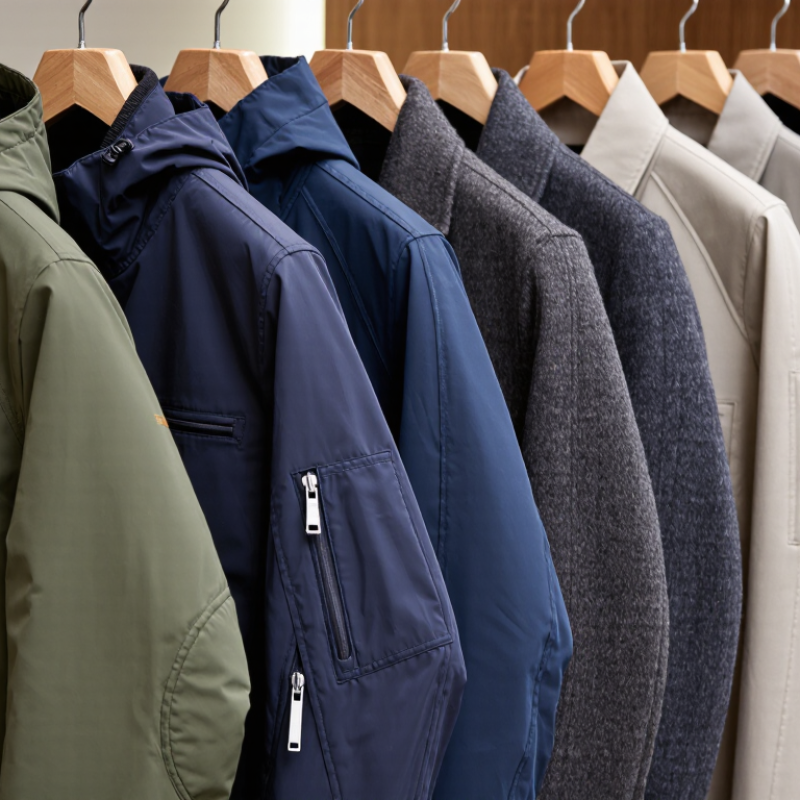
What Materials Last Longest in Outerwear?
Material durability depends on more than a fiber label. In field testing, abrasion, seam strength, water exposure, and repeated washing often decide an outerwear garment’s real lifespan. Dense nylon and polyester usually resist scraping well, while tightly woven cotton can perform reliably when kept dry. However, fabric alone cannot prevent failure. Weak zippers, thin seam tape, and poorly reinforced pockets may break first. Textile Exchange’s 2024 Materials Market Report recorded about 124 million tonnes of global fiber production in 2023, showing the scale of material choices. It does not prove that one fiber always lasts longest.
Care changes the result. A waterproof shell may lose performance when its surface finish becomes clogged with body oils and dirt. Gentle washing, complete drying, and avoiding unnecessary high heat can protect coatings and elastic fibers. WRAP’s Valuing Our Clothes report found that extending clothing life by nine months could reduce its carbon, water, and waste footprints by about 20–30%. That figure is useful, but everyday wear varies widely. My own experience suggests backpacks and rough walls expose weak fabrics faster than laboratory tests.
Tips: Check denier, seam construction, and repair access before buying. Choose reinforced shoulders for regular backpack use. Wash only when needed. Air-dry carefully. Inspect cuffs and zipper pulls early; small repairs are cheaper than replacement. No material wins every test.
| Material or Construction | Typical Service Life* | Abrasion and Tear Resistance | Weather and UV Performance | Main Durability Advantage | Common Failure Factors | Care That Extends Life |
|---|---|---|---|---|---|---|
| Full-grain leather | 10–20+ years | Very high; dense structure resists surface wear and punctures | Good when conditioned; prolonged moisture can cause staining or stiffness | Can be repaired, conditioned, and re-finished over time | Drying, cracking, excessive moisture, abrasion at seams and folds | Use leather conditioner when needed; dry naturally and store away from heat |
| Waxed cotton canvas | 5–15 years | High; tightly woven canvas handles repeated rubbing well | Good water resistance; wax gradually wears away and may need renewal | Heavy fabric and renewable surface treatment support long use | Loss of wax, seam wear, mildew if stored damp, aggressive washing | Brush off dirt, avoid routine machine washing, re-wax when water no longer beads |
| High-denier nylon | 5–10 years | High; strong synthetic fibers offer good tensile and tear strength | Good overall; direct, prolonged sunlight can weaken fibers over time | Strong, lightweight, and suitable for reinforced outdoor shells | Sharp snags, coating breakdown, heat damage, worn seam tape | Wash gently, avoid high heat, repair small tears promptly, renew water-repellent treatment when needed |
| High-density polyester | 5–10 years | Moderate to high; performance depends strongly on denier and weave | Generally good UV stability and resistance to moisture absorption | Retains shape and dries quickly; suitable for many shell fabrics | Snagging, surface pilling, failed coatings, high-heat exposure | Use low-temperature washing and drying; avoid fabric softener on technical shells |
| Dense wool or wool blend | 5–10 years | Moderate; naturally resilient but vulnerable to repeated friction and moth damage | Warm in damp conditions, but absorbs water and dries slowly | Elastic fibers recover from compression and resist odor buildup | Pilling, abrasion, shrinkage, moths, prolonged saturation | Air after use, clean according to the care label, store clean and protected from moths |
| Fleece polyester | 5–10 years | Moderate; fabric is comfortable but can wear under pack straps | Dries quickly and resists moisture absorption; wind protection is limited | Maintains insulating loft after repeated washing better than many natural fibers | Pilling, snagging, compressed loft, abrasion from backpacks | Wash inside out, use a gentle cycle, avoid high heat and excessive friction |
| Down insulation | 10–15 years when kept dry | Insulation itself is delicate; shell fabric determines most abrasion resistance | Excellent warmth-to-weight ratio; loses loft when wet and can dry slowly | High-quality down can regain loft for many years with proper care | Moisture, leaking feathers, torn baffles, compressed storage, dirty fill | Store uncompressed, dry completely, wash only when necessary with suitable detergent |
| Synthetic insulation | 5–10 years | Moderate; shell and quilting quality are usually the limiting factors | Keeps insulating better than down when damp and dries relatively quickly | Reliable wet-weather performance and simpler maintenance | Permanent loft loss, fiber migration, torn lining, repeated compression | Wash gently, dry thoroughly, avoid prolonged compression and excessive heat |
Dense nylon and polyester often resist abrasion, moisture, and daily rubbing. Tightly woven cotton can last well when kept dry. Construction matters more than the fiber label. No fabric wins every test.
Not always. A thick shell may still fail at weak zippers, pocket corners, or untaped seams. I once assumed thickness guaranteed durability. That judgment was too simple.
Shoulder straps repeatedly press and rub the same fabric. Choose reinforced shoulders for regular backpack use. Inspect contact areas after several trips. Small abrasions can become holes.
No. Coatings and seam seals gradually lose performance through dirt, body oils, abrasion, and washing. Rain may enter through one damaged seam. Check water beading occasionally.
Empty pockets and close zippers before washing. Use a gentle cycle and mild detergent when the care label allows. Air-dry in a cool, open place. Avoid unnecessary high heat.
Repair loose threads, torn cuffs, broken zipper pulls, and damaged pocket corners early. Accessible stitching and patchable panels make repairs easier. Small repairs matter. Delaying them can worsen damage.
Check fabric density, seam construction, reinforcement, zipper quality, and repair access. Laboratory abrasion results offer useful comparisons, but real life is messier. Crowded trains and rough walls test clothing differently.
There is no fixed lifespan. Care, weather, abrasion, storage, and construction change the result. A maintained garment may last years, but neglect can cause quick failure. My estimate remains imperfect.
When considering what materials last longest in outerwear, durability depends on more than the fabric itself. Wool offers warmth, resilience, and natural odor resistance, while cotton is comfortable but may wear faster when repeatedly exposed to moisture. Leather can last for many years with proper conditioning, although it requires regular care. Among synthetic options, nylon and polyester are valued for their strength, abrasion resistance, and easier maintenance. Waterproof breathable fabrics can provide excellent protection in harsh weather, but their performance depends on coatings, seams, and ongoing care.
The longest-lasting material also depends on how the garment will be used. Heavy-duty outerwear benefits from abrasion-resistant nylon or treated leather, while everyday coats may perform well with wool blends or durable polyester. Weather exposure, friction, washing methods, storage, and timely repairs all influence a garment’s lifespan. Choosing a material suited to the climate and activity, then cleaning and storing it correctly, can significantly extend outerwear’s useful life.

 ASALUXE Fashion