Why Is a Coat Different From a Jacket?

Time:2026-10-10 Author:Henry
0%

What is the difference between coat and jacket? The answer often begins with length, but that is only part of the story. A coat usually extends below the hips and offers greater protection from cold, wind, or rain. A jacket is generally shorter, lighter, and easier to layer over a shirt or sweater. Yet clothing terminology is not perfectly fixed. Regional habits, fashion brands, and local traditions can change the meaning.

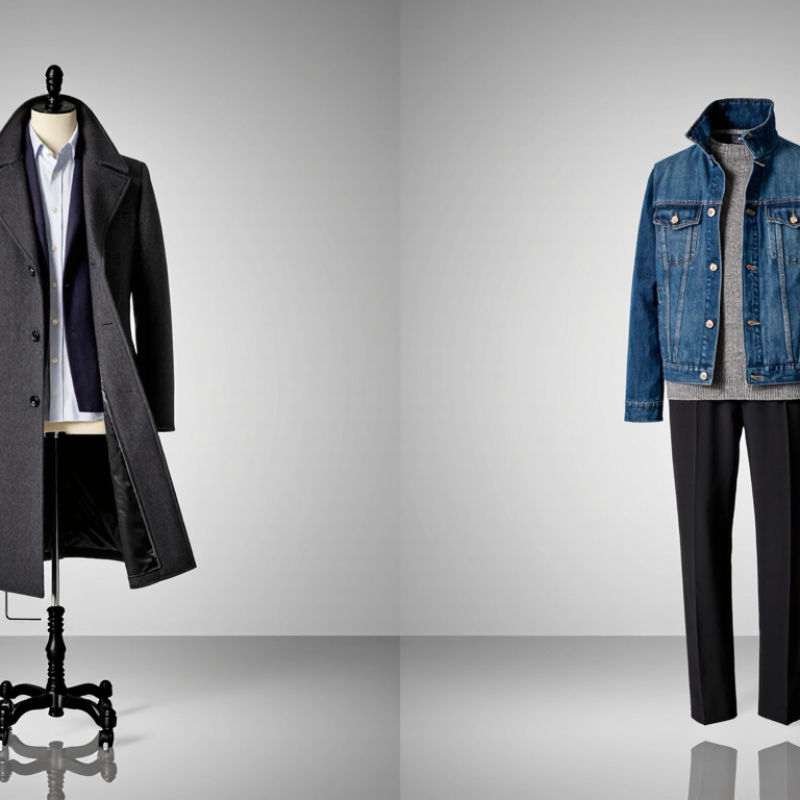
A wool overcoat may reach the knees and include a dense lining, broad lapels, and tailored shoulders. A denim jacket may stop at the waist and feel flexible enough for daily movement. A waterproof shell jacket can resist heavy rain, while a formal coat may focus more on warmth and appearance. These examples show why fabric, construction, purpose, and season also matter. Not just length.

Tailors and apparel specialists often describe coats as outerwear designed for extended exposure. Jackets usually serve as lighter outer layers or practical style pieces. However, the boundary becomes uncertain with garments such as car coats, field jackets, and long jackets. Even experts may classify them differently.

That uncertainty is worth noticing. A garment’s label does not always match its actual performance. A short insulated jacket may provide more warmth than a thin, knee-length coat. Checking the fabric, lining, closure, weather resistance, and intended use gives a more reliable answer. In this guide, we will examine these details closely and explain why the two terms overlap. Clothing language is useful, but never flawless.
Why Is a Coat Different From a Jacket?

Classify the Garments: HS 6201–6210 Maps Coat and Jacket Trade Codes

Why Is a Coat Different From a Jacket?

Classify the Garments: HS 6201–6210 Maps Coat and Jacket Trade Codes

In everyday speech, a coat is usually longer and heavier than a jacket. HS classification uses more precise evidence. HS 6201 covers men’s and boys’ overcoats, car coats, capes, cloaks, and similar woven outerwear. HS 6202 covers comparable garments for women and girls. Length alone does not decide the code.

A tailored jacket may fall under HS 6203 for men and boys or HS 6204 for women and girls. These headings also include suits, ensembles, trousers, and related garments. A knitted jacket belongs outside this range, usually within HS 6101–6110. That detail is easy to miss. Check the fabric structure, not just the product name.

HS 6205–6208 covers shirts, blouses, and underwear, while HS 6209 covers babies’ garments. HS 6210 addresses garments made from specified fabrics, including certain nonwoven, coated, or impregnated materials. For a rain jacket, inspect the shell, coating, lining, and primary function. A customs professional should compare the garment with the HS explanatory notes and the destination country’s tariff schedule. Product photos help, but technical sheets are stronger evidence. I have seen “light coats” described inconsistently, and that wording can create doubt. Record fiber content, garment measurements, closure type, and intended wearer before assigning a code.

Measure Coverage: ISO 8559-1 Defines Body Dimensions Behind Fit Data

Why Is a Coat Different From a Jacket?

A coat usually offers greater body coverage, while a jacket often ends near the hip. The difference begins with purpose, not appearance alone. ISO 8559-1 provides clear definitions for body measurements used in clothing development. These measurements include stature, chest, waist, hip, and arm length. Consistent methods make fit data more reliable across teams and regions.

A pattern maker can compare a garment’s measurements with the intended body dimensions. For example, a longer coat needs accurate torso length and hip data. Extra ease may support layering, movement, or insulation. A shorter jacket may need closer control around the shoulder and sleeve. ISO 8559-1 does not label every garment as a coat or jacket. It creates a common measurement language behind those decisions. That distinction matters. A size chart can look precise but still fail on real bodies. Body posture, fabric thickness, and movement can change the result. Fit testing remains necessary.

Tips: Measure over light clothing and keep the tape level. Record the measurement method, not only the number. Check both sides when posture appears uneven. Do not treat one sample as universal. A useful review asks whether the data reflects actual wear. Sometimes, it does not. That is where the process needs another fitting round.

Compare Construction: ASTM D3776 Tests Fabric Weight in g/m²

Why Is a Coat Different From a Jacket?

Compare Construction: ASTM D3776 Tests Fabric Weight in g/m²

A coat often feels different because its construction does more work. It may use heavier shell fabric, insulation, lining, and longer panels. A jacket can be lighter and shorter, but these are not fixed rules. Fabric weight remains a measurable starting point. ASTM D3776/D3776M provides standard methods for measuring fabric mass per unit area, reported in grams per square metre, or g/m². In testing, technicians cut representative specimens, weigh them carefully, and calculate the result. Conditioning matters. Moisture can change the reading.

The number gives useful evidence, not a complete verdict. A 300 g/m² woven fabric may feel warmer than a 450 g/m² fabric with an open structure. Fiber type, yarn density, coating, lining, and insulation also affect performance. The 2024 Textile Exchange Materials Market Report estimates global fiber production reached 124 million tonnes in 2023. That scale makes accurate material measurement increasingly important. Yet, I would not judge durability from fabric weight alone. I have seen dense, lighter fabrics resist abrasion better than bulky alternatives.

Tips: Ask for the ASTM D3776 test method, specimen condition, and average result. Check whether the figure covers shell fabric only. Compare samples under the same humidity and temperature. A small testing detail can change the buying decision. Sometimes, the label is less clear than the fabric.

Evaluate Protection: AATCC 127 Reports Water Resistance in cm H₂O

Why Is a Coat Different From a Jacket?

A coat is usually longer and warmer, while a jacket often feels lighter and more mobile. Yet protection depends on construction, not length alone. A short jacket with sealed seams can outperform a long coat with open stitching.

AATCC TM127 evaluates water resistance through hydrostatic pressure. The result is reported in centimetres of water pressure, or cm H₂O. Higher readings indicate that fabric resisted greater pressure before water penetrated. For reference, 10 cm H₂O equals 1 kPa. This is a controlled laboratory measurement, not a direct forecast of outdoor comfort.

A rainstorm adds movement, wind, abrasion, and pressure from backpacks. Seams may fail before the fabric does. Washing can also reduce durable water-repellent performance. The AATCC Technical Manual identifies specimen preparation and test conditions as important reporting details. ISO 811 uses a similar hydrostatic approach, but results should not be compared without checking test procedures.

Tips: Ask for the AATCC TM127 result in cm H₂O. Check whether it covers the fabric, seams, or finished garment. Inspect seam tape and cuff design, too. A high number sounds impressive, but it may not describe real wear. I once treated fabric pressure as the whole story. That was too simple. Protection remains a system, and test numbers need context.

Draw the Boundary: Use Hem, Insulation, and Purpose—Not Labels Alone

Why Is a Coat Different From a Jacket?

A coat usually reaches farther down the body, often covering the hips, thighs, or knees. That longer hem reduces drafts when you walk through cold streets. A jacket commonly ends near the waist or upper hip. However, hem length alone cannot settle the question. A short, heavily insulated garment may protect better than a thin, long coat.

Insulation reveals more about function. Down, wool, synthetic fill, or thick quilting traps warm air around the torso. A lighter shell may block rain and wind without adding much warmth. Check the cuffs, collar, lining, and closure too. A high collar and tight wrist openings can prevent heat loss during a bitter commute. These small details matter.

Purpose gives the clearest boundary. A tailored wool layer may serve formal outdoor wear, while a compact shell may suit cycling or hiking. Both could be called coats or jackets, depending on region and habit. My practical rule is simple: judge the hem, insulation, and intended use together. Labels can mislead. I have also found exceptions. A garment that looks like a jacket may perform like a coat in strong wind. The boundary is useful, but never perfect.

FAQS

What is the main difference between a coat and a jacket?

A coat usually covers more of the body. It may reach below the hip, while a jacket often ends near it. Purpose matters more than appearance.

Which body measurements support better garment fit?

Useful measurements include height, chest, waist, hip, shoulder, and arm length. A longer coat needs accurate torso and hip measurements. Small errors can affect movement.

Why can a size chart still fit poorly?

Body posture, fabric thickness, and movement change the result. One sample cannot represent every body. Fit testing remains necessary.

How should body measurements be taken?

Measure over light clothing with the tape level. Record the method, not only the number. Check both sides when posture looks uneven. Keep it practical.

Why might a coat feel heavier than a jacket?

A coat may use heavier outer fabric, insulation, lining, and longer panels. These layers add weight and coverage. Design details matter too.

What does fabric weight mean?

Fabric weight shows mass per square metre, usually written as g/m². Technicians weigh prepared fabric samples. Moisture can change the reading.

Does heavier fabric always provide better warmth or durability?

No. A lighter, tightly woven fabric may resist abrasion better than a bulky option. Open structure, fibers, coatings, lining, and insulation also matter. Weight alone misleads.

How can fabric weight comparisons become more reliable?

Use the same test method and similar sample sizes. Compare fabrics under matching temperature and humidity. Confirm whether the result covers only the outer fabric. Labels can be unclear.

What should a buyer ask about fabric testing?

Ask for the test method, sample condition, and average result. Request details about moisture control. A single number may hide important testing limits.

What should happen when fit or material data seems uncertain?

Review the garment on real bodies and repeat the fitting round. Inspect fabric samples directly. The process may need correction. That is not failure.

Conclusion

What is the difference between coat and jacket? The answer depends on more than everyday labels. A coat is generally longer, more protective, and designed for colder or wetter conditions, while a jacket is usually shorter and intended for lighter coverage or greater mobility. However, these categories can overlap, so construction and intended use provide stronger evidence than names alone.

Trade classification offers one useful framework: HS 6201–6210 organizes various outer garments according to their materials and design. Fit analysis can refer to body dimensions defined by ISO 8559-1, while ASTM D3776 helps compare fabric weight in grams per square meter. For weather protection, AATCC 127 reports hydrostatic water resistance in centimeters of water pressure. By examining hem length, insulation, fabric weight, and protective purpose together, readers can draw a clearer boundary between coats and jackets.

Henry

Henry

Henry is a dedicated marketing professional with a profound expertise in the company's offerings. With years of experience in the industry, he possesses an impressive understanding of the market dynamics and consumer behaviors that drive success. Henry is committed to sharing his insights through......