Are wool coats better than down jackets? The honest answer depends on weather, activity, and personal priorities. A wool coat may feel warmer in a city street, while a down jacket often performs better during cold, dry outdoor travel. The difference becomes obvious when comparing weight, moisture resistance, breathability, and daily comfort.
Stuart McCullough, former Managing Director of The Woolmark Company, said, “Wool is a natural, renewable and biodegradable fibre.” His statement highlights wool’s practical and environmental appeal. Wool fibers can absorb moisture vapor, reduce clammy feelings, and resist odors during long commutes. A dense wool coat also blocks wind effectively, especially when its weave is tightly finished. However, wool can become heavy after prolonged rain. It also usually needs more careful cleaning.
Down offers exceptional warmth with little weight. Small, airy clusters trap body heat inside a lightweight shell. This makes down jackets popular for hiking, winter travel, and emergency layering. Yet down loses much of its insulation when soaked. A wet jacket can feel cold and take hours to dry. Synthetic insulation may solve that problem, but it changes the comparison.
Real experience matters here. A wool coat feels dependable beside a café door in freezing rain. A down jacket feels easier to carry on a mountain trail. Neither option wins every time. Personal preference matters, too.
This guide will compare warmth, durability, weather protection, maintenance, cost, and sustainability. It will also question common assumptions. Wool is not automatically superior. Down is not automatically the smarter choice. The best answer may be less certain, but more useful.
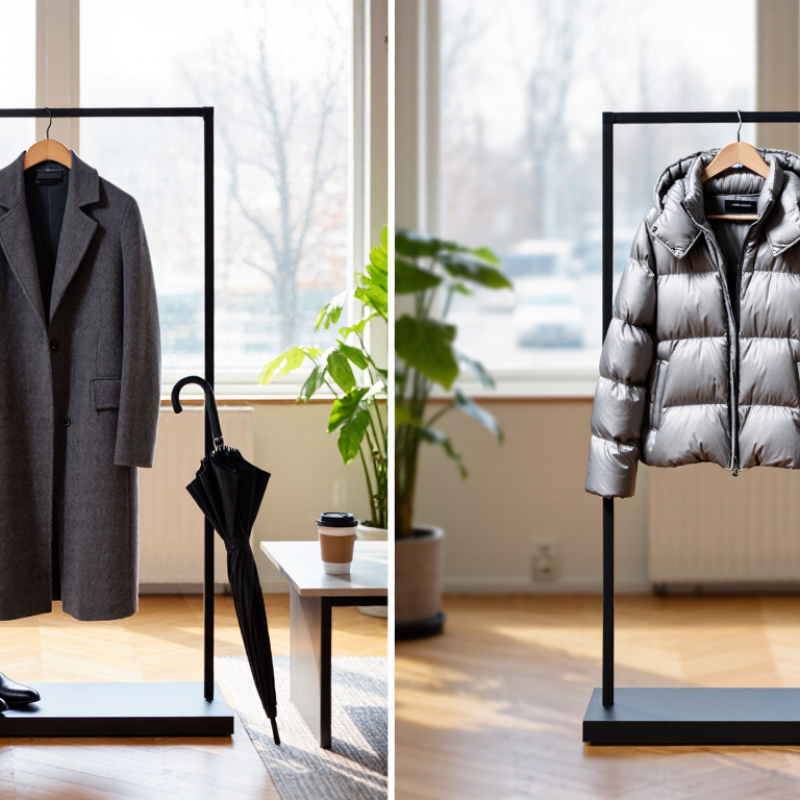
Are Wool Coats Better Than Down Jackets?
Wool coats and down jackets solve different insulation problems. A wool coat is designed for structure, wind resistance, and repeated urban wear. Its dense fibers can absorb some moisture vapor while retaining warmth. The International Wool Textile Organisation reports that wool represents roughly 1% of global fiber production, making it a specialized, lower-volume material rather than a universal solution.
Down jackets prioritize warmth with minimal weight. Their loft traps still air, which slows heat loss during cold, dry conditions. The International Down and Feather Bureau uses fill power testing to measure this loft, but higher fill power does not guarantee better performance in every situation. Wet down can collapse. That weakness matters during sleet, heavy rain, or long hikes without reliable shelter. A wool coat usually feels heavier, yet its outer fabric may handle brief drizzle and rough daily contact better. Neither wins everywhere.
Tips: Choose wool for commuting, formal clothing, and changeable city weather. Choose down for cold, dry trips where weight and packability matter. Check the complete garment, not just the insulation. A poor zipper, loose cuffs, or thin shell can waste good materials. Textile Exchange’s Materials Market Report 2024 places wool at about 1% of global fiber production, reminding us that sourcing and care deserve attention. I still find wool less convenient after a long, wet day. That trade-off is easy to underestimate.
Wool and down keep you warm through different mechanisms. Wool fibers trap small pockets of air and can retain some insulating ability when damp. They also absorb moisture vapor, which may help a coat feel less clammy during a brisk walk. Down clusters trap still air, creating a light layer of insulation that works especially well in cold, dry conditions. A well-filled down jacket often feels warmer for its weight, while a wool coat can feel more structured and comfortable in town.
Neither material wins every time. A wool coat may suit short commutes, changing indoor temperatures, and light drizzle, but it can feel heavy after hours of wear. Down is handy for long, cold outings, though it loses much of its insulating performance when wet unless protected by a suitable shell. Construction matters, too: lining, fit, stitching, and coverage around the neck can change how warm either coat feels. I used to assume thickness meant warmth. Not always.
Tips: Check the care label and consider your usual weather. In wet, windy conditions, add a water-resistant outer layer. For cold, dry walks, compare warmth, weight, and fit rather than judging by appearance alone. A little trial and error is normal.
Wool coats and down jackets solve different weather problems. Wool handles damp air surprisingly well. The International Wool Textile Organisation reports that wool can absorb up to 30% of its weight in water vapor without feeling clammy. On a foggy morning, this helps a wool coat feel steady against the skin. However, wool absorbs rainwater slowly and can become heavy after prolonged exposure. A tightly woven outer fabric improves resistance, but wool alone is not waterproof.
Down wins clearly on weight and warmth. The International Down and Feather Bureau measures fill power in cubic inches per ounce. High-quality down commonly reaches 700–900 cubic inches per ounce, creating substantial loft with little material. A well-designed down jacket may weigh below 500 grams, while a dense wool coat often exceeds 900 grams. That difference matters during travel or long uphill walks. Still, wet down loses loft and insulation quickly. My own mistake was trusting a water-resistant shell during continuous rain. The jacket looked dry outside, but the insulation gradually collapsed.
Breathability needs a more careful comparison. ISO 11092 testing uses evaporative resistance, or RET, where lower values indicate easier moisture transfer. Fabric construction often matters more than fiber type. A loose wool weave can ventilate better than a tightly packed down jacket. Yet down garments usually include lightweight shells and adjustable vents. Wool also dries slowly. This is easy to underestimate. For stop-and-go city use, wool offers stable comfort and better moisture buffering. For cold, dry activity, down gives more warmth per gram. In wet, windy weather, neither option is perfect without a reliable outer layer.
Choosing between wool and down depends less on fashion than on activity, moisture, and temperature. I often choose wool for city commuting, museum visits, and short walks in damp winter weather. Its dense fibers block wind, feel structured, and continue providing warmth when lightly wet. A wool coat also handles frequent movement around crowded streets without looking overly technical. However, it can feel heavy after several hours and may dry slowly beside a radiator.
Down jackets are usually better for dry, cold conditions and active outdoor use. Trapped air inside the filling offers excellent warmth with less weight. This matters during hiking, winter travel, or long periods standing outdoors. Yet down loses much of its insulating power when soaked. A weather-resistant outer layer helps, but it cannot fix every problem. I once wore a light down jacket during wet snowfall and regretted the choice before reaching the trail shelter. My judgment was too optimistic.
Tips: Match the jacket to the forecast, not just the temperature. For damp coastal weather, consider wool or synthetic insulation. For dry mountain cold, choose lightweight down with a protective shell. Check the hood, cuffs, and pocket placement before buying. Try moving your arms while wearing a sweater underneath. Comfort often reveals more than a specification sheet. Temperature forecasts also miss wind exposure, so examine the wind-chill details before leaving.
Are Wool Coats Better Than Down Jackets?
Care changes the answer. Wool coats usually tolerate brushing, airing, and occasional professional cleaning. They resist light odors, but moisture can shrink or distort the fibers. Store one with cedar protection; moth damage is frustratingly quiet. Down jackets need careful washing and complete drying, often with repeated low-heat cycles. Damp filling can clump, smell, and lose insulation. My own mistake was storing down slightly wet after rain. It looked dry outside.
Durability depends more on construction than fiber alone. Dense wool can handle years of commuting, while thin wool may pill at backpack straps. Down offers excellent warmth with low weight, but shell fabric can tear, and lost feathers reduce performance. The Textile Exchange Materials Market Report 2024 estimates global fiber production reached about 124 million tonnes in 2023. That scale makes long use important, regardless of the material. WRAP reports that extending clothing life by nine months can reduce carbon, water, and waste footprints by roughly 20–30%.
Initial cost is uneven. A well-made wool coat may cost more, yet simple repairs can preserve its structure. A down jacket may be cheaper or more expensive, depending on fill power, fabric, and stitching. Wool is renewable, but sheep farming carries land and methane impacts. Down can use a byproduct, although traceability and animal-welfare standards matter. Synthetic insulation avoids animal inputs but commonly relies on fossil-based fibers. No choice is perfectly clean. Repairability, careful washing, and wearing the garment for many seasons matter more than a confident label.
A comparison of care, durability, cost efficiency, and environmental impact
Scores use a 1–10 comparative index, where 10 indicates a more favorable overall result. Wool coats generally require less frequent washing and can be highly durable, while down jackets offer excellent warmth-to-weight efficiency but need careful laundering and thorough drying. Actual performance depends on garment construction, maintenance, usage, and end-of-life disposal.
Wool fibers trap air and absorb some moisture vapor. Down clusters trap still air with very little material. Not the same mechanism.
Down usually provides more warmth per gram, especially in cold, dry weather. A filled jacket may feel surprisingly light.
Wool can remain comfortable in damp air and light drizzle. However, prolonged rain makes it heavy. Wool alone is not waterproof.
Wet down loses loft quickly. Its insulation can collapse, even when the outer fabric looks mostly dry.
Wool often suits short commutes and changing indoor temperatures. It feels structured and handles moisture vapor steadily.
Down works well during long, cold outings. It offers strong insulation without adding much weight. Fit still matters.
No. Lining, stitching, fit, and neck coverage also affect warmth. I used to judge thickness alone. That was incomplete.
Breathability depends heavily on fabric construction. A loose wool weave may ventilate better than tightly packed insulation.
Add a reliable water-resistant outer layer. Neither wool nor down performs perfectly against sustained wind and rain.
Consider your usual weather, walking time, and tolerance for weight. Compare warmth, fit, and care needs. Trial and error helps.
Are wool coats better than down jackets? The answer depends on how and where you plan to wear them. Wool coats provide warmth through dense, naturally insulating fibers that help regulate temperature while offering a structured, polished appearance. Down jackets trap air in lightweight clusters, delivering exceptional warmth with less bulk and making them especially practical for cold outdoor activities. Wool generally performs well in dry, breezy conditions and can be breathable and durable, while down offers an excellent warmth-to-weight ratio but may lose insulating power when exposed to moisture. Weather resistance, packability, movement, and personal comfort are therefore important factors when choosing between them.
For daily commuting, formal settings, and moderate winter climates, a wool coat may be the more versatile choice. For hiking, travel, or very cold conditions where low weight and maximum insulation matter, a down jacket may be preferable. Care requirements, long-term durability, purchase price, and environmental impact also deserve attention, as wool and down each involve different maintenance needs and sourcing considerations.

ASALUXE Fashion